
Man-ime: Maeda Keiji — The Courage to Live Freely

Updated: 1 hour ago
By Mike Viscusi | Simple Gaijin
What can Japan's most flamboyant samurai teach us about independence, authenticity, honor, friendship, and the courage to live according to our own principles?
Series: Hana no Keiji — Kumo no Kanata ni (花の慶次 ―雲のかなたに―)
Original publication: 1990–1993
Creators: Tetsuo Hara (art), based on Keiichirō Ryū's novel, with scripting by Mio Asō
Character: Maeda Keiji (前田慶次), also known as Maeda Toshimasu
Historical period: Sengoku–Azuchi-Momoyama
Masculine ideal: The independent and authentic man
The Samurai Who Refused to Live by Anyone Else's Rules
Imagine living in a society where your family background, social rank, and loyalty to powerful superiors determine practically every aspect of your existence. Your clothing, behavior, career, and relationships are governed by expectations that leave relatively little room for individuality. Challenging those expectations could cost you your reputation, livelihood, or even your life.
Now imagine a man who looks at that entire system and decides he has better things to do. That man is Maeda Keiji, the larger-than-life protagonist of Hana no Keiji. He's an extraordinarily powerful warrior who wears flamboyant clothing, appreciates poetry and beautiful things, laughs in the faces of powerful men, and refuses to organize his life around someone else's approval.
Keiji possesses many characteristics commonly associated with traditional masculinity, including courage, physical strength, fighting ability, and personal honor.
Yet he also openly enjoys art, music, fashion, romance, and pleasures that other warriors might consider frivolous. He doesn't appear particularly concerned with whether those interests make him seem sufficiently masculine.
His character raises a fascinating question about masculinity and individuality. Does being a respectable man require conforming to society's expectations, or does genuine confidence come from knowing who you are? To explore that question, we first need to understand the historical world that inspired his story.
Who Was Maeda Keiji?
The historical Maeda Keiji was a warrior associated with Japan's turbulent Sengoku period, when rival military families competed for political influence and territorial control. He is commonly identified by either his birth name, Toshimasu, or by his nickname, Toshimasu Keijirō, although historical records use several names and leave aspects of his life uncertain. His birth year is disputed, and even the details surrounding his death are not entirely settled. But for all intents and purposes, Simple Gaijin believes that Keiji was born at some point between the years 1550 to around 1560, and died at some point after the Battle of Sekigahara in 1600 and before the Summer Siege of Osaka Castle in 1615.
Keiji, born into the Takigawa Clan lead by Takigawa Kazumasu, was the adopted son of Maeda Toshihisa, an older brother of the famous daimyo Maeda Toshiie. He later became associated with the Uesugi family, particularly through his relationship with the influential retainer Naoe Kanetsugu. His reputation as an eccentric warrior eventually contributed to the legends surrounding his name.
The manga takes this historical foundation and transforms it into something extraordinary. Tetsuo Hara's Keiji is enormously muscular, exceptionally handsome, and capable of defeating powerful opponents through almost superhuman martial arts abilities. His adventures involve famous samurai, political intrigue, extraordinary friendships, spectacular battles, and romantic encounters.
It's important to remember that Hana no Keiji is historical fiction rather than a documentary account of the real man's life. Many of its characters and events are dramatized, embellished, or invented for entertainment. Nevertheless, the fictional Keiji provides a fascinating vehicle for examining personal freedom and the meaning of honor.
傾奇者 (Kabukimono): The Art of Standing Apart
Perhaps one of the most important concepts associated with Maeda Keiji (and something that Simple Gaijin will write an article about eventually) is the 傾奇者 (kabukimono) movement.

During the late Sengoku and early Edo periods, the term referred to people known for unconventional appearances, extravagant clothing, and behavior that challenged ordinary expectations. Some were fashionable eccentrics, while others were associated with disruptive conduct and violence.
The word is connected with the idea of kabuku, meaning to lean, tilt, or depart from the ordinary. A kabukimono deliberately stood apart from conventional society through appearance, conduct, or lifestyle. Rather than seeking respectability through conformity, such a person might make individuality itself a public statement.
Keiji embodies this image almost perfectly. His distinctive clothing, flamboyant mannerisms, and willingness to challenge powerful authorities make him immediately recognizable. He doesn't hide his interests or soften his personality merely to satisfy people who disapprove of his choices.
However, Keiji's eccentricity isn't simply a matter of dressing strangely or attracting attention. His behavior reflects a deeper commitment to personal freedom and self-determination. He wants to decide for himself what makes a life honorable and worth living.
This distinction is important because eccentricity alone isn't necessarily admirable. A person can dress differently, behave outrageously, or reject social customs without possessing any meaningful principles. Keiji becomes interesting because his independence is frequently connected to loyalty, courage, generosity, and friendship.
The Difference Between Confidence and Approval-Seeking
Perhaps Keiji's most striking quality is how little he appears to need external validation. He doesn't constantly remind others of his strength, wealth, or accomplishments, and he rarely treats prestigious titles as proof of personal superiority. His confidence seems to come from an internal understanding of who he is rather than from the recognition he receives.
This makes him particularly interesting when compared with many other masculine protagonists. Some characters measure their worth through victory, public recognition, professional success, or the ability to command others. Keiji often appears comfortable with himself even when powerful people openly disapprove of his behavior.
Consider how frequently people adjust their personalities to fit the expectations of those around them. Someone may hide an unusual interest, abandon a creative ambition, or adopt an image that doesn't reflect his actual personality. Over time, maintaining that image can become more important than developing genuine character.
Keiji challenges this pattern by refusing to make approval the foundation of his identity. He enjoys what he enjoys, respects people he considers worthy, and accepts the consequences of standing apart. His confidence comes from personal conviction rather than the need to impress everyone around him.
Of course, this doesn't mean every social expectation deserves rejection. Courtesy, responsibility, and reasonable compromise are essential components of living alongside other people. Keiji's example is most useful when it encourages independence of thought rather than rebellion for its own sake.
Maeda Toshiie: When Family Loyalty Becomes a Burden
One of Keiji's most complicated relationships is with his adopted uncle, Maeda Toshiie, the powerful warrior who leads the Maeda family. Toshiie occupies a position of considerable political authority, while Keiji's eccentric behavior repeatedly creates tension within the household. Their relationship illustrates the conflict between family expectations and personal independence.
The manga portrays Keiji as someone unwilling to accept humiliation or restrictions merely because they come from a senior family member. He respects meaningful obligations but resents authority exercised primarily through status. This places him at odds with the political and social expectations surrounding his family.
One particularly memorable (and historically confirmed) episode involves Keiji inviting Toshiie to experience what appears to be a luxurious bath. The invitation becomes an elaborate prank involving cold water, humiliating the powerful family leader. Beneath the comedy, the incident also contributes to Keiji's departure from the household.
The episode reflects Keiji's tendency to use outrageous behavior to challenge authority rather than simply submitting to it. He refuses to organize his existence around a superior's expectations, even when doing so might make his life more comfortable. The manga presents the incident as part of his attempt to leave the family without transferring responsibility for his departure onto those he leaves behind.
However, the episode also reveals one of Keiji's shortcomings. A willingness to challenge unreasonable authority can be admirable, but humiliating someone isn't necessarily the wisest approach to resolving a disagreement. Independence becomes more constructive when combined with sound judgment and an understanding of consequences.
Matsukaze: A Partnership Built on Mutual Respect
One of Keiji's most recognizable companions isn't another samurai. It's his enormous black haired, white maned horse, Matsukaze (松風), whose name can be translated as Pine Wind. The animal is exceptionally powerful, spirited, and difficult for ordinary people to control.

Matsukaze is more than a convenient means of transportation. He reflects many of the qualities associated with Keiji himself, particularly independence, strength, and an unwillingness to submit easily. Their relationship becomes an important visual and thematic part of the manga.
What makes their partnership interesting is that Keiji doesn't simply treat the horse as an object to be dominated. He recognizes Matsukaze's extraordinary nature and develops a relationship built around understanding the animal's strength. Their companionship suggests that mutual respect can be more meaningful than control through intimidation.
As a metaphor for leadership, this relationship is especially effective. People often assume that authority means forcing others to comply with their wishes, but trust and cooperation can produce stronger relationships. Being capable of controlling someone doesn't necessarily mean controlling them is the right thing to do.
The lesson extends beyond horses or martial arts. In friendships, workplaces, and families, people generally respond better when their abilities and individuality are recognized. Respect can create forms of loyalty that intimidation never will.
Naoe Kanetsugu: Friendship Between Two Very Different Men
Keiji's friendship with Naoe Kanetsugu (直江兼続) is one of the most important relationships in Hana no Keiji. Kanetsugu is a famous retainer of the Uesugi family, recognized for his political responsibilities, strategic abilities, and commitment to serving his lord. His lifestyle contrasts considerably with Keiji's wandering independence.

Kanetsugu operates within a system of duty, loyalty, and established obligations. Keiji prefers the freedom to travel, form friendships, and make decisions without surrendering his individuality. Yet the two men develop profound mutual respect.
This is especially interesting because neither needs the other to adopt his way of life. Kanetsugu doesn't have to abandon his responsibilities to earn Keiji's admiration, while Keiji doesn't need to become a conventional retainer to deserve Kanetsugu's friendship. They recognize that honorable conduct can take different forms.
Their relationship becomes particularly meaningful when Keiji voluntarily assists Kanetsugu and the Uesugi family. He doesn't act simply because someone has ordered him to fulfill an obligation. Instead, his loyalty arises from personal conviction and genuine affection.
This illustrates a useful distinction between loyalty that is demanded and loyalty that is freely given. An obligation may compel someone to perform a task, but it cannot necessarily produce genuine friendship or respect. Keiji's devotion becomes meaningful precisely because he has the freedom to choose it.
Toyotomi Hideyoshi: Standing Before the Most Powerful Man in Japan
Few situations reveal Keiji's confidence more clearly than his encounters with Toyotomi Hideyoshi. As Japan's dominant political figure during the late Sengoku period, Hideyoshi possesses immense authority and influence. Most people approaching him would have strong reasons to behave cautiously.
Keiji, however, refuses to treat political power as proof of personal greatness. He recognizes Hideyoshi's position but isn't particularly interested in gaining status through submissive behavior. His interactions with the ruler demonstrate that he considers personal dignity more important than conventional displays of deference.
The manga also depicts Hideyoshi offering Keiji an opportunity to enter his service. Such an offer could provide extraordinary prestige, security, and material advantages. Keiji nevertheless rejects the opportunity, preferring to preserve the independence that defines his existence.
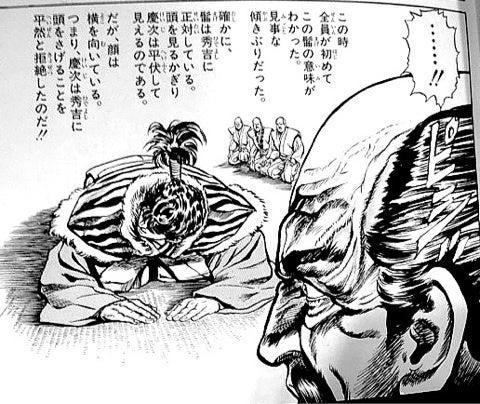
This is an important moment because Keiji isn't rejecting success out of an inability to obtain it. He is turning away from an opportunity that many other warriors would eagerly pursue. The distinction is between lacking choices and deliberately selecting a different kind of life.
Modern readers can recognize a similar tension in their own circumstances. Someone might pursue a prestigious career because it genuinely reflects his ambitions, while another person might accept the same position primarily to satisfy family or social expectations. Success is more meaningful when it reflects your values rather than someone else's definition of achievement.
Friendship Without Possession or Control
Keiji's relationships frequently demonstrate that he values people for their individual qualities rather than their usefulness or social position. His companions include warriors, eccentric personalities, ordinary people, and individuals who would otherwise be overlooked by powerful society. He often treats personal character as more important than formal status.
His friendship with Okumura Sukeemon offers another example of this attitude. Sukeemon is a capable warrior associated with the Maeda family and shares a longstanding relationship with Keiji. Their bond reflects trust and mutual admiration despite the differences in their responsibilities.
Keiji also develops relationships with individuals who initially oppose him. His ability to recognize courage, suffering, or sincerity in unexpected places allows some confrontations to develop into meaningful personal connections. This gives his character a degree of emotional generosity that contrasts with his imposing appearance.
These relationships challenge an overly competitive understanding of masculinity. If every capable man is treated as a rival, friendship becomes difficult and trust becomes conditional. Keiji demonstrates that another man's strength or accomplishments don't automatically diminish his own worth.
A confident man can admire another person's abilities without feeling threatened by them. He can maintain his individuality while developing genuine friendships with people who see the world differently. That ability is an important component of emotional maturity.
Freedom Doesn't Mean Living Without Responsibilities
One of the risks in celebrating Keiji's independence is overlooking the responsibilities that come with personal freedom. His lifestyle can appear appealing because he often avoids the restrictions governing more conventional samurai. He travels, chooses his companions, and pursues experiences according to his interests.
However, freedom doesn't eliminate consequences. Decisions affect other people, and refusing obligations indiscriminately can create problems for friends, family members, and anyone who depends upon us. A person who treats every responsibility as an infringement upon his independence may eventually become unreliable.
Keiji is most admirable when his freedom allows him to fulfill commitments willingly. His support for Kanetsugu demonstrates that he can choose loyalty without surrendering his identity. His willingness to help people in danger also shows that independence and concern for others can coexist.
This is a more mature interpretation of freedom than simply doing whatever one wants. True independence involves accepting responsibility for the choices you make. It means understanding when obligations deserve your commitment and when expectations should reasonably be challenged.
That distinction matters in modern life. Building a career, maintaining relationships, and fulfilling family responsibilities inevitably require compromise. The goal shouldn't be to avoid every obligation, but to understand why those obligations matter and whether they reflect the life you want to build.
The Problem With Keiji's Recklessness
Although Keiji possesses admirable confidence, he sometimes demonstrates remarkably poor judgment. He provokes powerful people, takes unnecessary risks, and occasionally treats dangerous confrontations as opportunities for amusement. His extraordinary fighting abilities allow him to survive situations that would have disastrous consequences for ordinary people.

This behavior is entertaining because the reader knows Keiji is an exceptional warrior. His opponents frequently underestimate him, only to discover that their assumptions were completely mistaken. Watching an arrogant authority figure receive a humiliating lesson can be extremely satisfying.
However, the same behavior would be much less admirable outside the manga. Deliberately antagonizing someone doesn't automatically demonstrate courage, particularly when a peaceful alternative is available. A man who constantly creates conflict may eventually endanger himself and others.
Keiji's conduct therefore provides an important distinction between confidence and recklessness. Confidence allows someone to act according to his principles despite reasonable opposition. Recklessness involves disregarding consequences simply because confrontation feels exciting or satisfying.
Being fearless isn't always the same as being wise. Sometimes the more mature choice is to avoid a confrontation that serves no meaningful purpose. Personal dignity doesn't require winning every argument or humiliating everyone who challenges you.
Is Keiji's Masculinity Too Individualistic?
Another potential limitation of Keiji's philosophy is its emphasis on personal independence. His lifestyle works partly because he possesses extraordinary abilities that allow him to survive without relying heavily on conventional institutions. Ordinary people rarely enjoy the same degree of freedom.
Most men must balance personal ambitions against financial obligations, employment responsibilities, family commitments, and the needs of others. They cannot simply abandon every inconvenient situation and expect their circumstances to improve. Independence without adequate planning can quickly become instability.
Keiji's approach also risks encouraging an overly romantic understanding of individualism. A person may believe that accepting advice, changing his mind, or compromising with others somehow demonstrates weakness. In reality, those actions can reflect maturity and sound judgment.
The strongest version of Keiji's philosophy isn't that a man should answer to nobody. It's that he should understand his principles well enough to make thoughtful decisions about the responsibilities he accepts. Independence should provide the freedom to act responsibly, not an excuse to avoid responsibility altogether.
This distinction separates a genuinely self-directed man from someone who simply dislikes being told what to do. One operates according to considered values, while the other may merely react against authority. Keiji is at his best when his actions reflect the former rather than the latter.
Where Keiji Gets Masculinity Right
Keiji demonstrates several qualities that remain valuable well beyond the historical setting of Hana no Keiji. His confidence, individuality, friendships, and relationship with authority provide useful examples of masculine character. These qualities deserve consideration even when his exaggerated behavior makes him an imperfect role model.

Confidence Without Constant Validation
Keiji doesn't appear to need approval from powerful figures to feel secure in himself. He recognizes his abilities and understands that wealth or social rank doesn't automatically determine someone's value. His confidence allows him to pursue interests that other people might consider unconventional.
This offers an important lesson about personal identity. Men shouldn't feel compelled to organize every aspect of their lives around appearing impressive to others. Genuine confidence involves accepting your interests, abilities, and limitations without constantly comparing yourself to everyone around you.
Authenticity Without Shame
Keiji enjoys fashion, music, poetry, beautiful objects, and other expressions of culture. He doesn't consider those interests incompatible with being a formidable warrior. His character challenges the assumption that traditionally masculine men must limit themselves to a narrow collection of approved activities.
A person's interests don't determine his courage, integrity, or responsibility. Someone can appreciate art and literature while also enjoying physical competition or martial arts. Healthy masculine identity should be broad enough to accommodate genuine individuality.
Loyalty by Choice
Keiji's friendship with Kanetsugu demonstrates that independence and loyalty aren't necessarily opposites. He values meaningful relationships and willingly accepts risks for people he respects. His devotion becomes especially admirable because it arises from personal conviction.
In everyday life, chosen loyalty can be an important foundation for healthy relationships. Friends, partners, and colleagues should support one another because their relationships have meaning rather than because obedience has been demanded. Genuine commitment is strengthened when people understand why they are making it.
Respect Beyond Social Status
Keiji frequently refuses to judge people solely by their wealth, family background, or political influence. He can recognize admirable qualities in individuals whose social positions differ considerably from his own. His willingness to challenge powerful authorities reflects a belief that status doesn't automatically establish moral superiority.
This principle remains relevant in modern institutions and workplaces. Someone occupying a prestigious position may deserve respect for legitimate accomplishments, but that position doesn't place the person beyond criticism. Character should be evaluated through conduct rather than titles alone.
Where Keiji Falls Short
Keiji's independence and flamboyant personality make him compelling, but those qualities also create serious shortcomings. His confidence occasionally turns into arrogance, while his willingness to challenge authority can become needless provocation. These weaknesses are worth examining because they demonstrate how admirable virtues can become destructive when taken too far.
He Sometimes Provokes Conflict Unnecessarily
Keiji occasionally seems to enjoy antagonizing powerful people simply because he can. His willingness to challenge authority is admirable when confronting genuine injustice, but not every confrontation serves a worthwhile purpose. Humiliating another person can create lasting problems even when the original disagreement was relatively minor.
In real life, disagreements often require patience and diplomacy. A man who treats compromise as surrender may repeatedly damage relationships or professional opportunities.
His Lifestyle Depends on Extraordinary Abilities
Keiji can afford to take risks that ordinary people should reasonably avoid. His exceptional combat skills and reputation frequently allow him to escape consequences that would be devastating for less capable individuals. This makes his independence entertaining but difficult to imitate literally.
A responsible person must consider practical realities such as money, employment, health, and personal safety. Pursuing independence without preparing for those realities can create avoidable hardship. Freedom becomes more sustainable when supported by planning and responsible decisions.
Independence Can Become Stubbornness
Keiji places enormous importance on living according to his own principles. That commitment is admirable, but it can also make compromise appear unnecessarily threatening. Someone who always insists on doing things his own way may struggle to maintain healthy partnerships.
Maturity involves recognizing that other people possess legitimate needs and perspectives. Accepting advice doesn't automatically mean surrendering your identity, and changing your mind isn't necessarily a sign of weakness. Sometimes flexibility demonstrates greater confidence than stubborn resistance.
He Romanticizes Personal Risk
Keiji frequently treats dangerous situations as opportunities to demonstrate courage or experience excitement. His willingness to confront extraordinary opponents contributes to the manga's appeal. However, enjoying unnecessary danger isn't a prerequisite for living an honorable life.
Real courage often involves accepting responsibility for people who depend upon us. Avoiding a reckless confrontation can demonstrate better judgment than entering one merely to prove toughness. A man's worth shouldn't depend on how often he places himself in danger.
What Maeda Keiji Can Teach Modern Men
Most men will never live as wandering samurai or challenge powerful Sengoku warlords. Nevertheless, they will face decisions about careers, relationships, personal ambitions, and social expectations. Many of those decisions involve balancing individual freedom against responsibilities to other people.
Someone may feel pressured to pursue a profession that doesn't reflect his interests. Another person may hesitate to explore an unconventional hobby because he worries about being judged. Others may remain in situations that make them unhappy simply because abandoning those expectations feels socially unacceptable.
Keiji encourages readers to examine those assumptions rather than accepting them automatically. His character suggests that living honorably doesn't require pursuing the same goals as everyone else. A meaningful life should reflect personal values rather than merely fulfill an externally imposed image of success.
However, Keiji also reminds us that independence carries responsibility. A person should consider the consequences of his decisions, especially when those decisions affect people who depend upon him. Personal freedom becomes most valuable when it allows someone to build a life that is both authentic and responsible.
Perhaps the greatest practical lesson is that confidence doesn't require constant performance. A man can appreciate unusual interests, choose an unconventional career, or disagree respectfully with authority without needing to make every decision a public declaration of rebellion. Being comfortable with yourself means having the freedom to be authentic without constantly needing to prove that authenticity to others.
The Final Verdict: Is Maeda Keiji a Positive Masculine Role Model?
Yes—with important qualifications. Keiji represents a compelling example of masculine independence, authenticity, and confidence. His refusal to measure personal worth through wealth, rank, or approval challenges some of the most restrictive expectations associated with traditional masculinity.
He also demonstrates genuine loyalty, generosity, and admiration for people whose lifestyles differ from his own. His friendships reveal that independence doesn't necessarily require emotional detachment or isolation. Indeed, some of his most admirable decisions arise from the relationships he freely chooses to maintain.
Nevertheless, his behavior shouldn't be imitated without considering its consequences. His recklessness, tendency to provoke authority figures, and willingness to enter unnecessary confrontations can create problems that reasonable compromise might avoid. Likewise, his extraordinary fictional abilities make his lifestyle far less practical for ordinary people.
We can admire Keiji's individuality without believing every social expectation deserves rejection. We can appreciate his courage without glorifying reckless behavior. And we can value his independence without treating responsibility as an obstacle to personal freedom.
Ultimately, Keiji demonstrates that masculinity doesn't have to be defined by conformity. A confident man can live according to his principles while respecting the right of others to choose different lives. That combination of independence and respect is what makes his philosophy worth considering.
Final Thoughts: The Courage to Be Yourself
If there's one lesson I'd take from Maeda Keiji, it's that a man's worth shouldn't depend entirely on whether he satisfies other people's expectations. The world of Hana no Keiji is dominated by powerful warriors, rigid hierarchies, and intense competition for political influence. Keiji moves through that world without allowing titles or wealth to determine how he values himself.
His approach is especially refreshing because he doesn't limit his identity to fighting ability. He appreciates friendship, beauty, music, poetry, and personal freedom while remaining a formidable warrior. His character demonstrates that masculine strength can coexist with creativity, affection, and unconventional interests.
However, genuine independence isn't the same as rejecting every responsibility. A meaningful life requires commitments, relationships, and decisions that sometimes demand compromise. The goal shouldn't be to escape every obligation, but to choose worthwhile obligations and fulfill them with integrity.
Keiji's greatest quality isn't merely his willingness to defy authority. It's his determination to live according to values he understands and accepts. Being a good man doesn't require becoming the person society expects you to be; it requires becoming someone whose choices reflect genuine character.
And that's a lesson worth remembering whenever personal identity comes into conflict with social expectations. Strength, honor, and responsibility don't have to look identical for every man. Sometimes the greatest act of confidence is simply having the courage to live honestly.
Continue Exploring Man-ime
Maeda Keiji represents independence, authenticity, and loyalty freely given. His story offers a revealing contrast with Kenshiro's compassionate protection and Momotaro Tsurugi's disciplined leadership. Together, these three characters demonstrate that masculine strength can serve different purposes without requiring everyone to follow the same path.
Previous article: Momotaro Tsurugi — Brotherhood, Discipline, and the Meaning of True Leadership
Next in the series: Jonathan Joestar — What Makes a True Gentleman?
Return to: Man-ime — Masculinity Through the Lens of Classic Men's Manga
Join the Discussion
Do you consider Maeda Keiji a positive masculine role model, or does his independence occasionally become recklessness? Where should the line be drawn between living authentically and disregarding responsibilities toward other people? And do you believe modern society gives men enough freedom to develop their own identities without constant pressure to conform?
I'd be interested in hearing how you interpret Keiji's philosophy and his relationships with the people around him. His story raises questions that extend far beyond the Sengoku period, particularly when it comes to confidence, personal identity, and meaningful obligations. Those questions are precisely what make Man-ime an interesting subject for cultural discussion.
Man-ime is a Simple Gaijin cultural commentary series exploring masculinity through the characters, stories, and cultural values of classic Japanese manga.

Comments